
IUD Insertion Model: Supporting Hands-On Clinical Training
Introduction
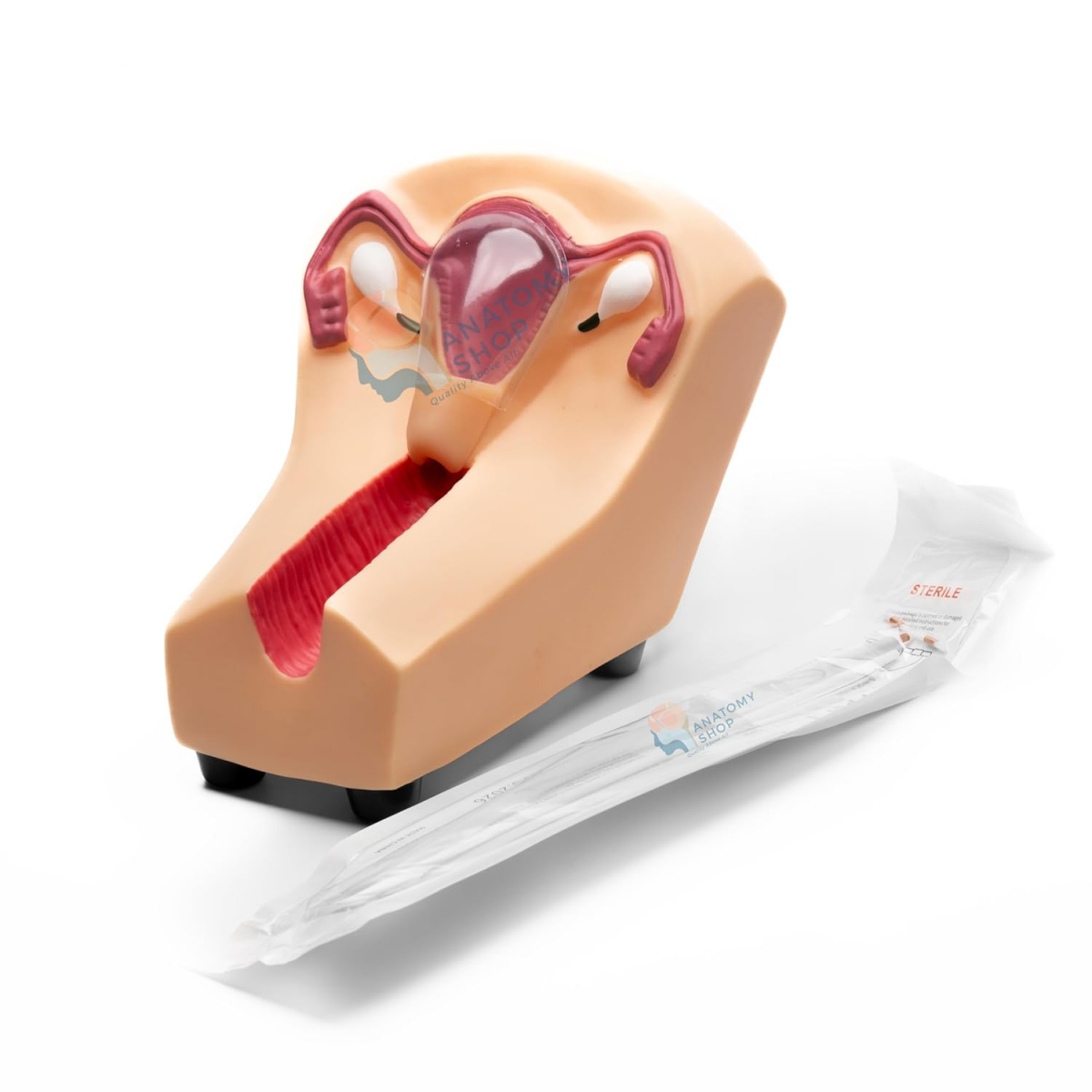
Health-care education increasingly relies on simulation to help students develop practical skills before working with real patients. An IUD insertion model is a specialized training aid that allows nursing, medical, and other health-care students to learn about intrauterine device (IUD) procedures in a controlled educational environment. By providing realistic anatomy and opportunities for repeated practice, these models can complement classroom instruction and supervised clinical education.
What Is an IUD Insertion Model?
An IUD insertion model is a simulation tool designed to represent relevant female reproductive anatomy for educational purposes. It can allow students to visualize anatomical structures and practise procedural steps associated with IUD placement under instructor supervision.
Rather than learning exclusively from diagrams or lectures, students can use a physical model to develop familiarity with clinical instruments and procedural work-flows.
Why Is IUD Simulation Training Important?
IUD insertion requires appropriate clinical knowledge, preparation, communication, and technical skills. Simulation provides students with an opportunity to practise these aspects without involving an actual patient.
An IUD insertion model can help students:
1. Understand anatomy:
Physical models can make anatomical concepts easier to visualize and understand.
2. Become familiar with instruments:
Students can learn how commonly used instruments are handled and organized during training.
3. Practise procedural steps:
Repeated simulation can help learners become more familiar with the sequence of a procedure.
4. Develop confidence:
Practising in a controlled environment can help reduce uncertainty before supervised clinical experiences.
5. Receive instructor feedback:
Educators can observe students and provide immediate guidance on technique and preparation.
Supporting Hands-On Learning
Hands-on practice is an important component of clinical education. Students can use an IUD insertion model to connect theoretical knowledge with practical skills.
Educators can design training sessions that focus on different aspects of the procedure, including patient preparation, positioning, equipment selection, procedural work-flow, and post-procedure considerations. Simulation can also be incorporated into broader reproductive health education.
Creating Realistic Clinical Scenarios
An IUD insertion model can be used as part of scenario-based training rather than as a standalone teaching tool. Instructors can create exercises that require students to combine technical skills with communication and clinical decision-making.
For example, training scenarios may focus on:
1. Patient communication:
Practising how to explain procedures clearly and professionally.
2. Clinical preparation:
Identifying and organizing the appropriate supplies before a simulated procedure.
3. Procedural sequence:
Demonstrating the correct work-flow under instructor supervision.
4. Patient safety:
Discussing appropriate checks, precautions, and follow-up considerations.
5. Documentation:
Learning the importance of recording relevant clinical information.
Benefits for Nursing and Medical Education
Using simulation models can provide several benefits for health-care education programs:
1. Repeatable practice:
Students can practise skills multiple times in a controlled setting.
2. Standardized training:
Instructors can provide consistent learning experiences across different student groups.
3. Safe learning environment:
Students can develop technical skills without exposing patients to unnecessary training-related risks.
4. Better skills assessment:
Educators can observe practical performance and identify areas for improvement.
5. Greater preparedness:
Familiarity with clinical procedures can help students transition more confidently into supervised patient care.
Conclusion
An IUD insertion model can be a valuable addition to nursing, medical, and reproductive health education. When combined with qualified instruction and appropriate clinical education, hands-on simulation can support more confident and prepared health-care professionals.